Subcultures in México!

Cholos

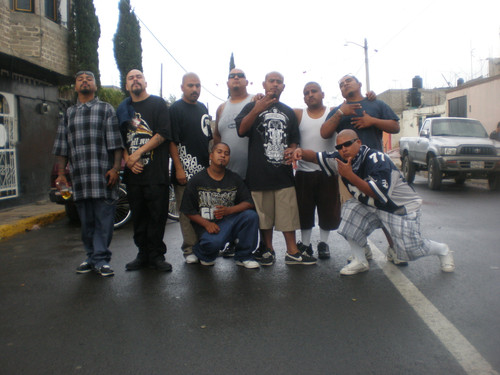
This youth culture, heir to pachuquismo, also had its origins among the Mexicans of the border area of the country, from where it would derive its exaggerated aesthetics: Dickies brand bombacho pants, loose t-shirt, tennis shoes, sometimes suspenders and sometimes bandanas, chains that go from the belt to the bag of the pants.
In Mexico the cholo is the lover of urban life in its simple form of gangs. in solitary the Cholos are mainly engaged in painting graffiti and minor criminal activities (one or the other kidnapping) in large groups are real headaches, for themselves and for everyone else.
Chacas

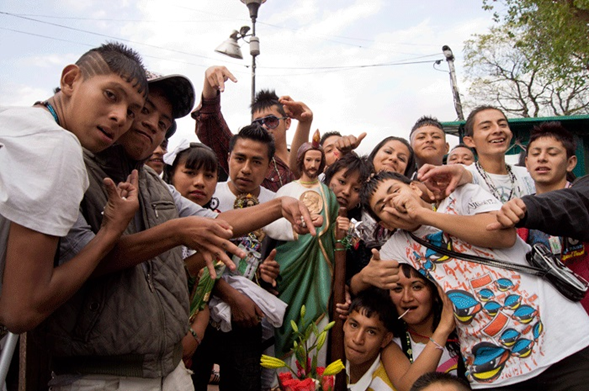
From the hand of reggaeton came the Chacas in Mexico, an urban tribe that is housed in the popular neighborhoods of the delegations Gustavo A. Madero, Venustiano Carranza, Cuauhtémoc and Iztapalapa.

These young people between the ages of 13 and 21 who call themselves reggaetoneros are characterized by clothing that combines both consumer trends and religious beliefs: their aesthetics are guided by the fashion implanted by the exponents of their favorite music, to which they add scapulars and other religious items.

Lewis Model

Resultado de imagen para mexicano en barranquilla

If I think of the Lewis model, I would put Mexico into the Multi-Active culture because I believe that Mexicans are this kind of people who are very emotional and familiar. I have a stereotype that tells me that they like to do a lot of things at the same time and they are a bit unpunished. After reading about Mexico’s position in the Lewis model, I can see that even though this country is in a very diverse group of cultures, geographically and in their religions, beliefs and values, they can be classified as a group.


Thinking about a Mexican in Barranquilla I think that the change of environment would not be drastic because if we look at the model Colombia is right next to Mexico, both are a Multiactive culture, that is to say they are emotionally similar and have common customs for example both Colombians and Mexicans do not respect the schedules, they are religious, discomfort with strict discipline. For this reason I think that a Mexican in the culture of Barranquilla would not have problems in coexisting and adapting.

Hofstede!

Resultado de imagen para colombia y mexico

* PDI (Power Distance Index):

I scored 75% because I believe that in Mexico people accept social inequality. For me, people here are used to being governed, by their husbands, by the elderly or by those in charge of the country.

I wasn’t very far away, in fact the PDI in Mexico is 81%.

In Colombia this dimension has a score of 67%. Here society believes that inequalities between people are simply a fact of life. In Mexico, on the other hand, it is a hierarchical society. This means that people accept a hierarchical order in which everyone has a place and needs no further justification.

* UAI (Uncertainty Avoidance Index):

I put a score of 90% because I think that In Mexico people have a rigid code of belief and a suspicion of unorthodox ideas. For me, people here have strong thinking’s and they respect their customs.

I hit with my guess, it was really close. The UAI in Mexico is 82%.

In Colombia this dimension has a score of 80%. Both scores are practically the same. These two countries believes that it is important show emotions and the have to be expressed. Also rules are not necessarily followed.

MAS (Masculinity versus Femininity):

I scored 80% because I believe that in Mexico people think that success and achievements are important. For me, they are focused on getting what they want. They prefer to win and grow.

I wasn’t that far away, in fact the MAS in Mexico is 69%.

In Colombia this dimension has a score of 64%. Here people believe that the competition is aimed at members of other groups, not those who are perceived as members of their own group. In Mexico, on the other hand, managers are expected to be decisive and assertive, the emphasis is on fairness, competition and performance, and conflicts are resolved by fighting them.

México And Colombia

Agitando banderas de Puerto Rico y México-en el del mapa político del mundo Foto de archivo - 25264382

Gender roles are culturally stereotypical behaviors, therefore, they can be modified since they are tasks or activities that a person is expected to perform because of the sex to which he or she belongs.

As in Colombia, in Mexico there is a mentality that men have to be protective, maintain the costs of the house, while women define themselves as wives, independents, educators and housewives. mexico is similar to colombia an example is that in that country girls are taught to play with food and play with dolls, so from small are involved in domestic activities that later performed at home, on the other hand, children are educated so that they are strong and do not express their feelings, because «crying is a girl’s job», in addition to prohibiting them from being weak.

México

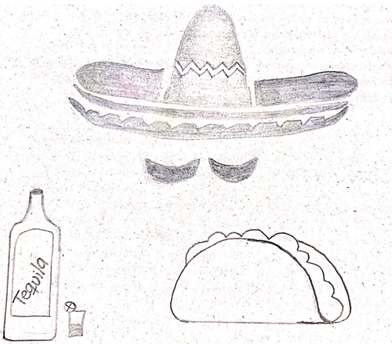
when I think on Mexico, the first thing that come to my mind it is people drinking tequila and beer, also people listening rancheras , nachos and tacos. This thinking come from the idea that in this country tequila is an international icon just like ranchera, another thing that comes to mind is the problem with drug trafficking at the international level.

I think that maybe my stereotype from these people come from the movies, videos, netflix series and Mexican novels.Also , I think on war , I have thinking of people fighting and doing whatever it takes for them to be able to guard their drug routes.